Colorado is genuinely hard on hardwood floors. The combination of high altitude, low relative humidity, forced-air heating in winter, and wide seasonal temperature swings creates conditions that push wood to move more than it does almost anywhere else in the country. Most homeowners know about seasonal gapping. What fewer know is that the finish you choose plays a real role in how that movement behaves.
Solid hardwood finished with a hard wax oil, like Bona Craft Oil 2K or Rubio Monocoat, handles Colorado's climate differently than traditional polyurethane. Not necessarily better in every way, but differently in ways that matter here. This post walks through how hard wax oil works, why it behaves the way it does at altitude, and what you are actually trading when you choose it over polyurethane.
The Core Difference: Film vs. Penetrating Finish
Polyurethane sits on top of the wood. It cures into a hard plastic film that protects the surface from above. Hard wax oil does the opposite. It penetrates into the wood fibers and cures within them, leaving almost nothing on the surface itself.
That distinction drives everything else. A film finish and a penetrating finish respond to wood movement in completely different ways, and in Colorado's climate, the difference is noticeable.
Hard wax oil finishes are microporous, meaning they let the wood breathe. In a dry climate like Colorado's, that is not a marketing claim. It is a functional characteristic that changes how your floor behaves through the seasons.
How Hard Wax Oil Helps With Seasonal Gapping
No finish stops wood from moving. Hardwood absorbs and releases moisture as humidity rises and falls, and in Colorado, it falls a lot in winter. Gaps between boards in the dry months are normal. The question is how bad those gaps get and how they close back up in spring.
It Moves With The Wood, Not Against It
Polyurethane forms a rigid film across the surface of multiple boards. When the wood shrinks in winter, that film resists the movement. Over time, it can crack at the edges of boards, peel at seams, or develop stress fractures. Hard wax oil, because it lives inside the wood rather than on top of it, flexes when the wood flexes. There is no film to crack.
No Panelization
This is the one that surprises most homeowners. Polyurethane can act as a mild adhesive between adjacent boards. When it cures across the top of a floor, it bonds slightly to the edges where boards meet. In winter, when those boards want to shrink and pull apart, they cannot always move independently. Instead, a group of boards may stick together and pull away as a single panel, creating one large gap rather than several small distributed ones.
Hard wax oil, because it penetrates rather than films, does not bond boards side to side. Each board can move on its own. The movement distributes across the floor rather than concentrating into one dramatic gap.
Indoor relative humidity in Colorado homes can drop below 20% in winter without a whole-home humidifier. That is extreme. At that level, even well-acclimated hardwood will show seasonal gaps. The finish does not eliminate this, but it does affect how the wood responds to it.
If you run a whole-home humidifier and keep indoor RH between 35% and 55% year-round, you minimize movement regardless of finish type. That is still the single best thing you can do for a hardwood floor in Colorado.
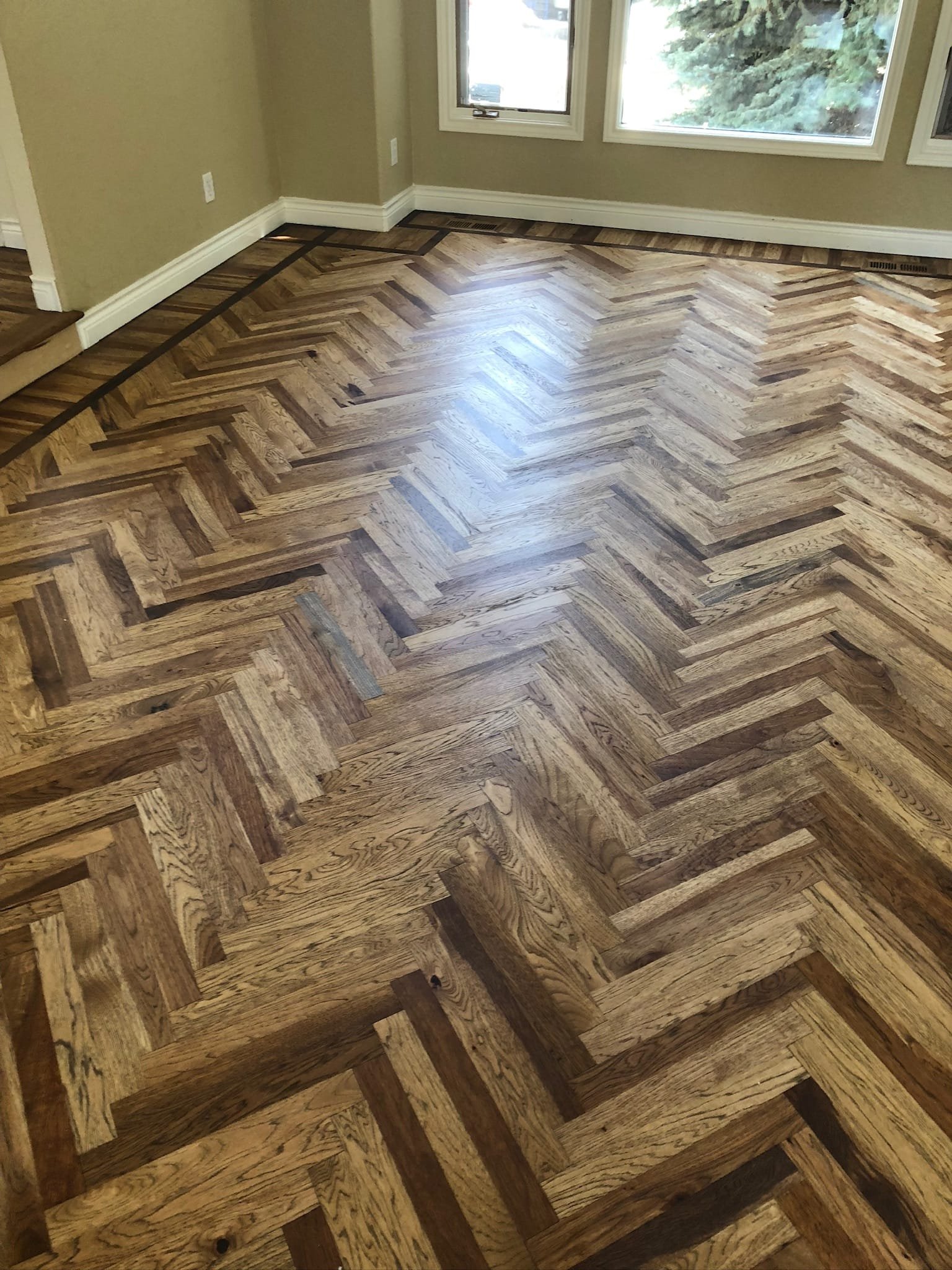
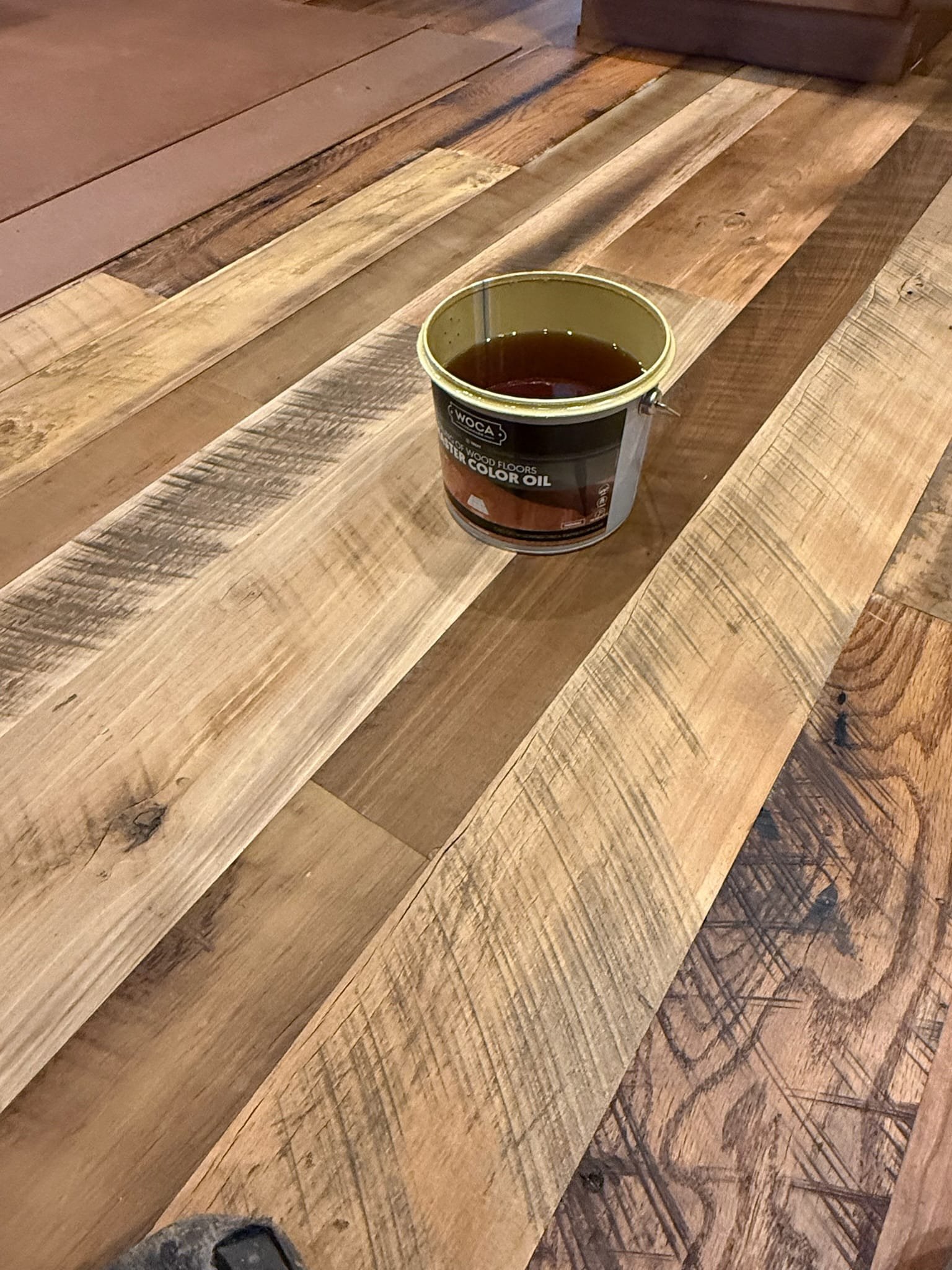 Hard wax oil enhances the natural grain rather than sitting on top of it.
The Two Products Worth Knowing
Bona Craft Oil 2K
A two-component hard wax oil that delivers significantly higher durability than single-component oils. The 2K chemistry cross-links after mixing, creating a tougher, more chemical-resistant surface while keeping the natural matte look hard wax oils are known for. Excellent for busy households and high-traffic areas. Available in a range of tones including natural, white, and gray.
Rubio Monocoat
A one-coat system using linseed oil that molecularly bonds to the wood fibers. Zero VOC. Slightly faster application due to single-coat process. Excellent for custom color work, available in a wide range of tones and can be mixed for precise results. Very popular for white and gray washes on white oak.
Both are excellent products. The choice between them often comes down to timeline, color goals, and personal preference. Bona Craft Oil 2K is the tougher option thanks to its two-component chemistry, which cross-links after mixing, making it more resistant to daily wear and chemical exposure than a standard single-component oil. Rubio's single-coat system speeds up the job and its color range is unmatched, which is why it is the go-to for custom-stained floors.
Benefits And Trade-offs: The Honest Comparison
Hard wax oil is not the right finish for every situation. It has real advantages and real limitations, and anyone telling you otherwise is selling you something. Here is the full picture:
| Feature | Hard Wax Oil (Bona 2K, Rubio) | Traditional Polyurethane |
|---|---|---|
| Aesthetic | Ultra-matte, natural "in the wood" feel. The wood looks and feels like wood. | Higher sheen. Can read as "plasticky" especially at satin or semi-gloss. |
| Repairs | Easy spot repairs. Sand the scratch and re-oil just that board. No refinishing the whole room. | Requires sanding and refinishing the entire floor to fix one damaged area without visible patches. |
| Durability | Lower chemical resistance. Bleach, wine, and acidic spills can stain if left sitting. Needs periodic maintenance oiling every few years. | High resistance to chemicals, heavy traffic, and spills. Low maintenance once cured. |
| Eco-Friendly | Very low to zero VOCs. Safe for kids and pets shortly after application. | High VOCs and strong odors during application. Extended ventilation required. |
| Colorado Gapping | Moves with the wood. Reduces panelization. More distributed seasonal movement. | Film can crack under stress. Side-bonding can worsen gap concentration. |
| Application | Can be applied same-day with the right process. Requires clean, bare wood. Bona Craft Oil 2K requires mixing before application and typically two coats. Rubio Monocoat is a single-coat system. Both need a well-prepped bare wood surface. | Typically 3 coats with sanding between. Longer cure time before move-in. |
| Long-term Cost | Periodic maintenance oiling adds cost but is far less disruptive than full refinishing. | No maintenance for years, but full refinish when needed is a bigger job and cost. |
Who Should Choose Hard Wax Oil
Hard wax oil makes the most sense for homeowners who want the most natural-looking floor possible, value easy spot repairs over zero maintenance, have kids or pets and want low off-gassing, and are installing white oak or a species where the natural look is a priority.
It is especially well-suited for wide plank white oak, which is the most popular species we are installing in Colorado right now. Wide plank wood moves more than narrow strip flooring because each board covers more width. A finish that flexes with the wood rather than fighting it is a good match.
Who Should Stick With Polyurethane
Polyurethane is still the right call for high-traffic commercial spaces, kitchens with heavy spill risk, homeowners who want zero maintenance, anyone who will not be around to do periodic re-oiling, and lower-budget projects where the cost of maintenance oiling adds up over time.
It is also the better choice if you want a higher sheen or a more traditional look. Some species, especially older red oak in a historic home, look exactly right under a satin or semi-gloss polyurethane. Nothing wrong with that.
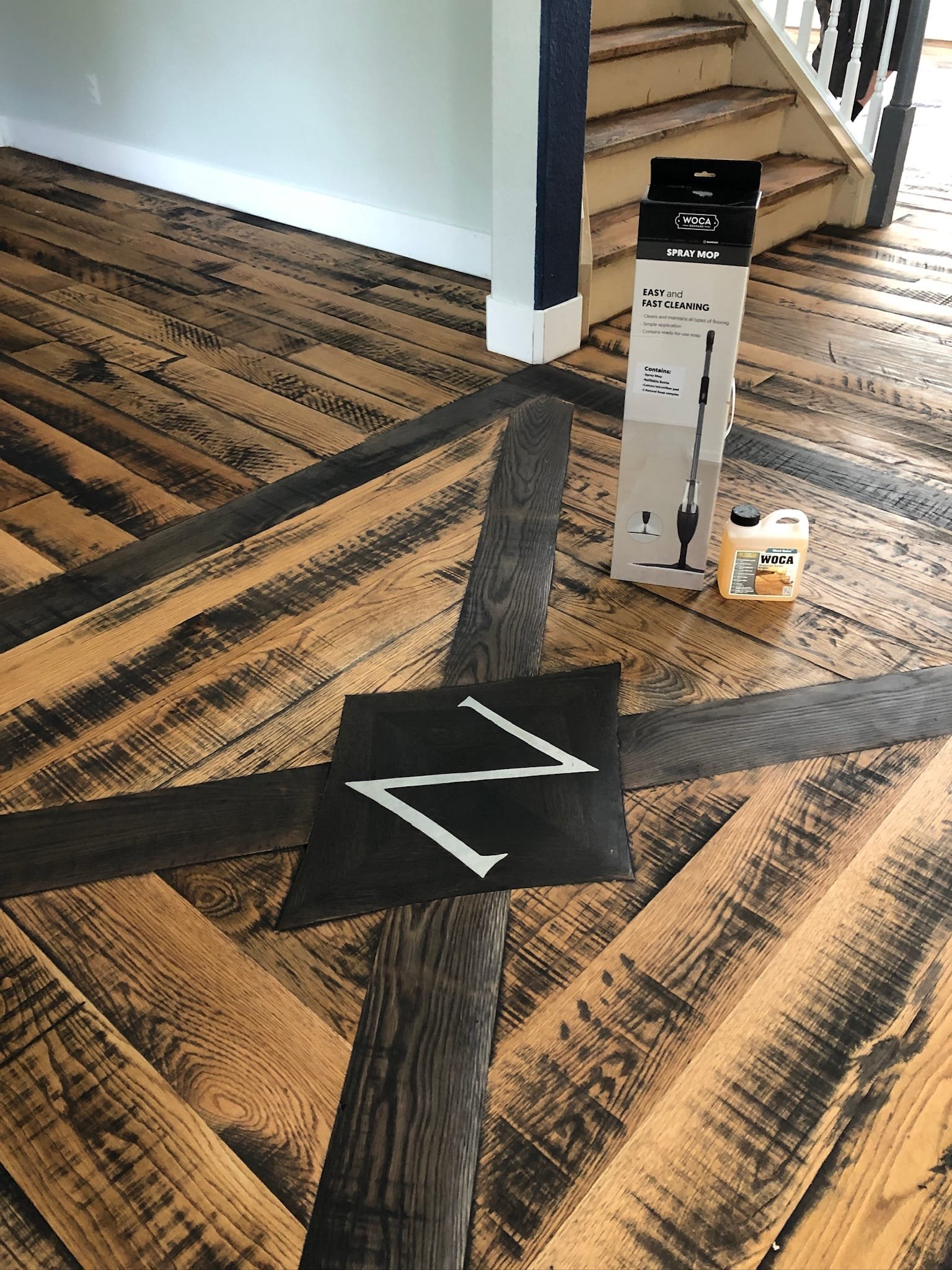 The finish matters, but so does the installation. Every project gets the same level of care.
The Practical Reality In Colorado Homes
We have installed both finishes across hundreds of homes in the Denver metro, Boulder County, and the Front Range. Our honest take: hard wax oil is not for everyone, but the homeowners who choose it are almost always glad they did.
The most common regret we hear from polyurethane customers is about a scratch, pet mark, or water stain that they cannot fix without refinishing the whole room. With hard wax oil, that same situation is a 20-minute spot repair at home.
The most common concern from hard wax oil customers is spills. Wine, bleach, cooking oil. These require quick cleanup. If you are not the type to wipe a spill immediately, or if your kitchen floor takes serious abuse, factor that in.
Solid white oak, 3/4" thick, 4" to 6" wide planks, finished with Bona Craft Oil 2K or Rubio Monocoat in a matte finish. Add a whole-home humidifier. You will have a floor that looks stunning, responds well to Colorado's climate, and is easy to maintain for decades.
If that sounds like something worth talking through, we are happy to walk you through the options in person. We have sample boards of both finishes and can show you exactly what they look like on the species you are considering.
Questions We Get Asked Most
Can I switch from polyurethane to hard wax oil on my existing floor?
Yes, but it requires a full sand-down to bare wood first. You cannot apply hard wax oil over polyurethane. The oil needs to penetrate bare fibers to bond correctly. If your floor is being refinished anyway, it is a great time to switch.
How often does a hard wax oil floor need maintenance?
Typically every 3 to 5 years in a residential setting, depending on traffic. High-traffic areas like hallways may need attention sooner. The maintenance is simple. Clean the floor, apply a thin maintenance oil coat by hand or with a buffer, let it cure. No sanding, no mess, no contractor needed.
Will hard wax oil change the color of my wood?
A natural/clear Bona Craft Oil 2K or Rubio adds a very slight warmth. It enhances the grain rather than changing the color. Both products are also available in tinted versions that range from very subtle white wash to deep colors. Color work on white oak with Rubio in particular is extremely popular right now and produces beautiful results.
Is one coat really enough for Rubio Monocoat?
Yes, when applied correctly. Rubio's chemistry is designed to bond in a single coat. The key is surface prep. The wood needs to be properly sanded and completely clean before application. Applied correctly on a well-prepped floor, a single coat bonds fully and performs well. Applied to a floor that was not properly prepared, problems show up fast.
That is the prep emphasis we bring to every finish we apply, whether it is Rubio, Bona Craft Oil 2K, or a traditional waterborne poly. The finish is only as good as what it goes down on.
Want To See These Finishes In Person?
We have sample boards of Bona Craft Oil 2K, Rubio Monocoat, and our standard waterborne poly finishes. Come see them side by side and we will help you figure out what is right for your home and how you live in it.
Request a Free Estimate →