What Buyers Should Know Before Installing
There’s a reason reclaimed wood flooring commands premium prices in Colorado’s luxury mountain market, and it’s not just the weathered patina or hand-hewn character marks. When you’re building or renovating a mountain home in Evergreen, Conifer, or Genesee, reclaimed flooring offers something new materials simply can’t replicate: authenticity with a story.
But not all reclaimed wood flooring is created equal. The difference between a floor that elevates your home and one that looks like distressed laminate comes down to three factors: source material quality, proper acclimation for Colorado’s climate, and the installation by craftsmen who understand how century-old wood behaves.
Why Reclaimed Wood Works in Mountain Architecture
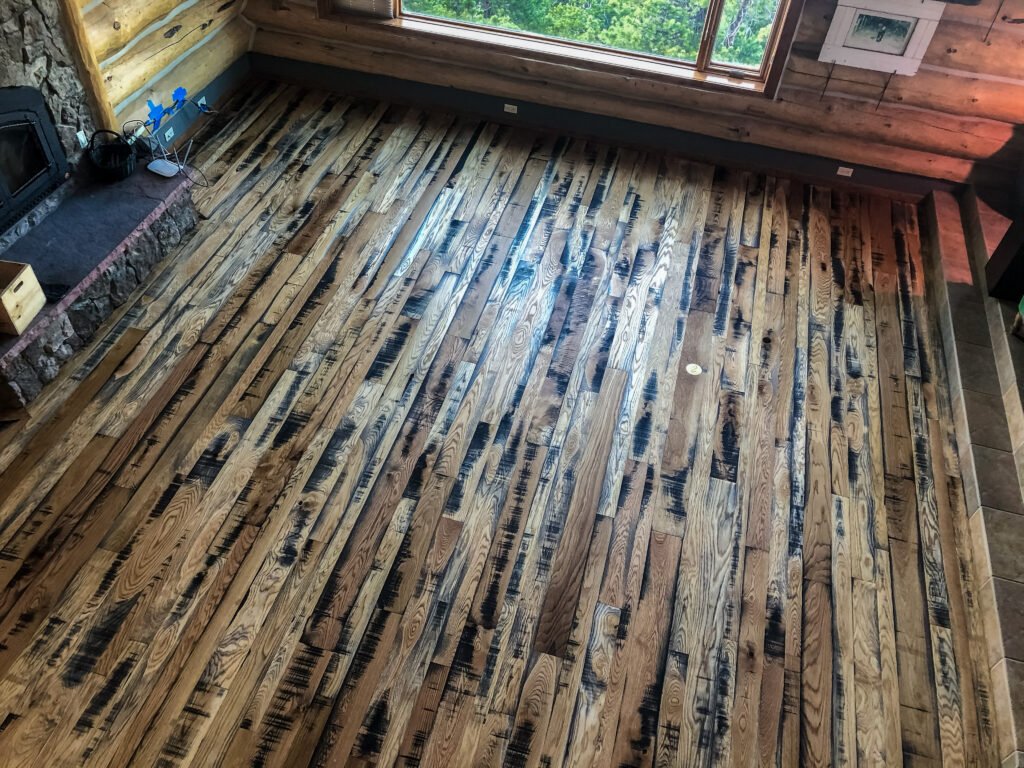
Colorado mountain homes share a design language. They have exposed timber beams, stone fireplaces, and expansive windows framed for the forest views. Reclaimed hardwood flooring completes that aesthetic in ways new wood can’t match.
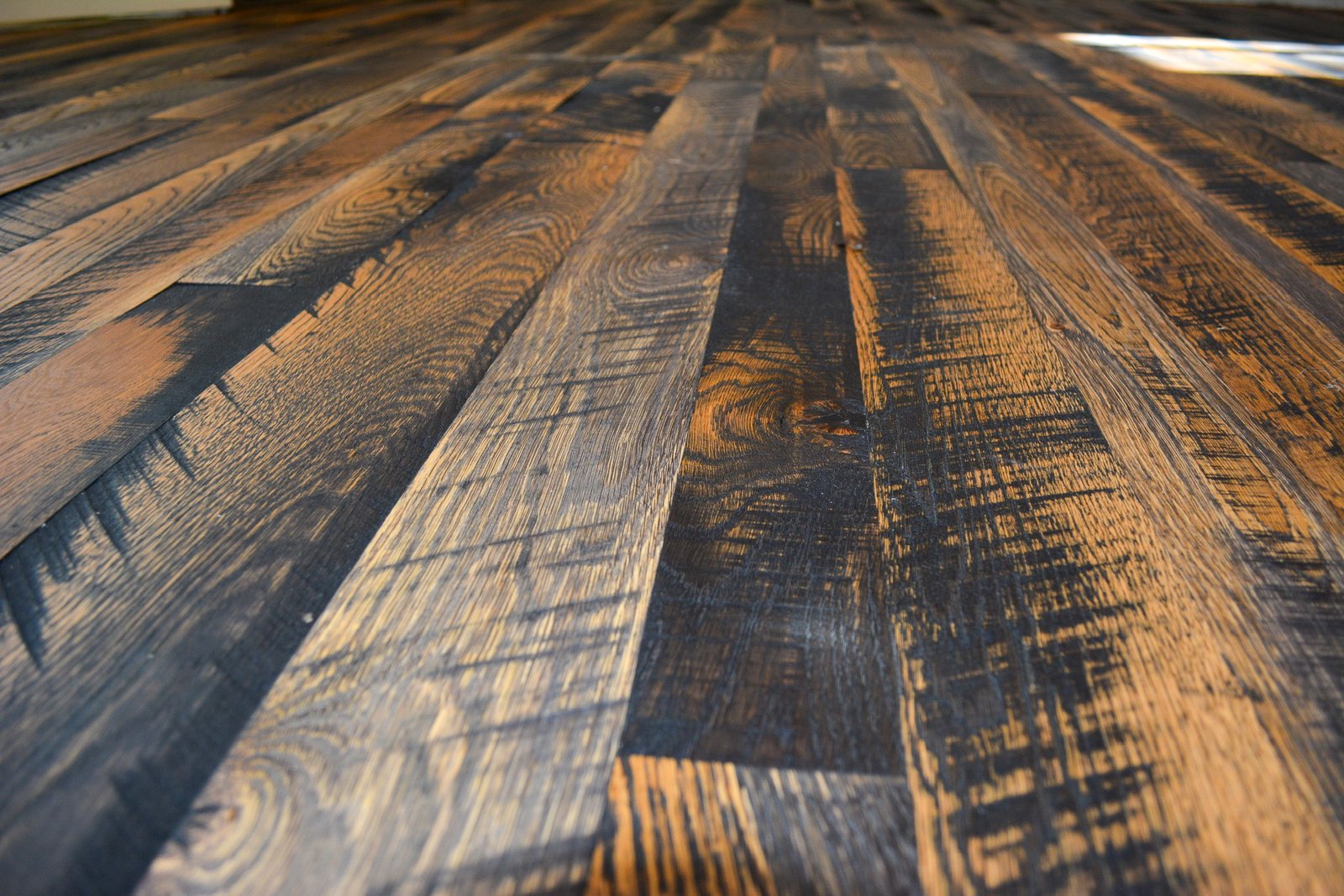
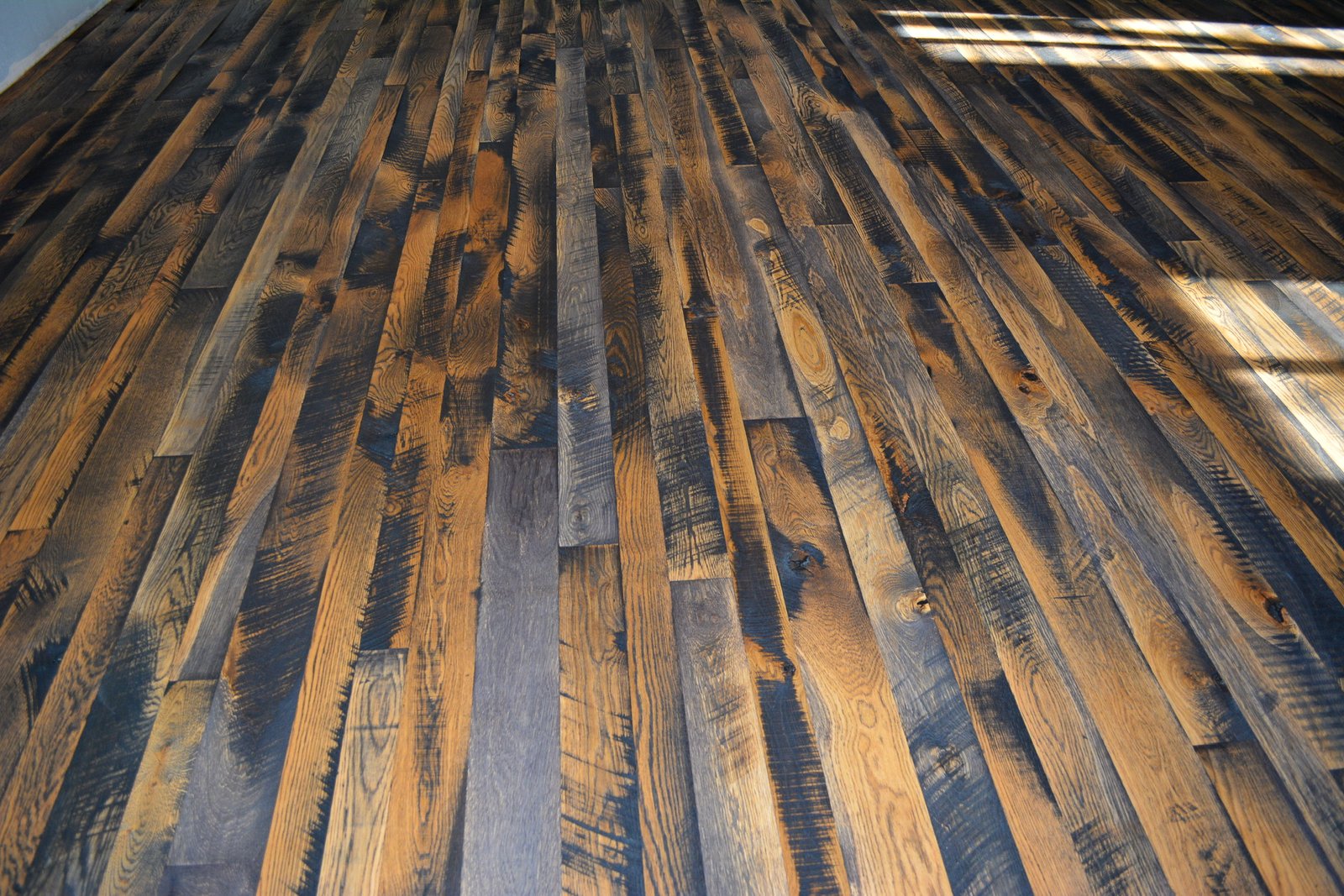
Authentic Character: Reclaimed barn wood, warehouse beams, and salvaged factory floors carry genuine wear patterns, nail holes, and color variation that developed over decades. These aren’t manufactured “distressed” marks, they’re the real thing.
Dimensional Stability: Properly sourced reclaimed wood has already gone through decades of expansion and contraction cycles. When acclimated correctly to Colorado’s dry climate (typically 6-9% moisture content at altitude), old-growth reclaimed lumber often proves more stable than new-growth alternatives.
Environmental Story: High-end buyers increasingly care about sustainability narratives. Reclaimed flooring diverts historic lumber from landfills while reducing demand for new forestry. For LEED-focused projects or environmentally conscious homeowners, it checks important boxes.
Source Matters: Not All Reclaimed Equals Quality
The reclaimed wood market ranges from genuine architectural salvage to questionable overseas imports. For Colorado installations, here’s what separates premium from problematic:
Documented Provenance: Quality suppliers can tell you where the wood originated. Midwestern barns, East Coast factories, Southern warehouses are some choices. This isn’t just marketing; it indicates proper salvage practices and material handling.
Species Verification: Genuine reclaimed often features old-growth oak, pine, or Douglas fir with tight grain patterns you won’t find in modern lumber. Properly identified species ensures your installer can select appropriate finish products and maintenance protocols.
Milling Standards: Premium reclaimed flooring has been properly milled to consistent thickness, inspected for structural integrity (no hidden rot or insect damage), and kiln-dried to appropriate moisture content. Cheap reclaimed skips these steps, you’ll pay for it later in cupping or gapping issues.
Colorado’s Climate Challenge: Acclimation Is Non-Negotiable
Denver sits at 5,280 feet. Evergreen at 7,200. Conifer at 8,200. At these elevations, relative humidity regularly drops to 20% or lower, especially during winter months. Reclaimed wood, regardless of origin, must acclimate to these conditions before installation.
The Two-Week Minimum: Reclaimed flooring should acclimate in your home (HVAC running at normal settings) for at least two weeks before installation. In mountain homes, three weeks is better. This allows the wood to stabilize to your specific altitude and humidity levels.
Moisture Testing: Professional installers measure both the wood’s moisture content and your subfloor before installation. For Colorado mountain homes, you’re typically targeting 6-8% moisture content with no more than 2% differential between the flooring and subfloor.
Gap Expectations: Even properly acclimated reclaimed wood will show seasonal gaps in Colorado winters. For rustic mountain aesthetics, small gaps (1/32″ to 1/16″) between boards enhance authentic character. Buyers expecting perfectly tight seams year-round should consider this before choosing reclaimed.
Installation Considerations for Character Wood
Reclaimed flooring presents unique challenges that separate experienced craftsmen from installers accustomed to factory-perfect modern wood.
Width Variation: Many reclaimed floors feature mixed-width planks (5″, 7″, 9″ widths in the same floor). This creates visual interest but requires careful layout planning. Random width installations look chaotic without intentional pattern design.
Thickness Irregularities: Despite milling, reclaimed wood may have slight thickness variations board-to-board. Skilled installers sand the subfloor flat and use leveling techniques during installation to ensure even transitions, critical for high-traffic areas and furniture placement.
Fastening Techniques: Nail holes and surface irregularities mean face-nailing is often visible with reclaimed installations (and part of the aesthetic). Experienced installers position fasteners to complement existing character marks rather than appear random or sloppy.
End Matching: Quality reclaimed installations pay attention to end joints, staggering them properly and sometimes hand-selecting boards to avoid clustering similar wear patterns or color tones in one area.
Finish Selection for Mountain Environments
The floor finish you choose makes or breaks reclaimed flooring, especially in Colorado’s demanding conditions.
Oil vs. Polyurethane: Hard-wax oil finishes enhance reclaimed wood’s natural texture and patina while allowing easier spot repairs, ideal for mountain homes where wear is celebrated, not hidden. Polyurethane offers better moisture protection for high-traffic areas or homes with pets.
Sheen Level: Satin and matte finishes complement reclaimed wood’s rustic character better than high-gloss applications. They also show dust and scratches less visibly. They’re practical for mountain homes where red dirt and pine needles are constants.
Color Considerations: Many reclaimed floors look best with clear finishes that preserve natural patina. If adding stain, test extensively because reclaimed wood’s uneven density may create unpredictable stain absorption. Custom color blends often work better than off-the-shelf stains.
Maintenance Reality Check
Reclaimed floors in mountain homes require different maintenance mindsets than new hardwood.
Embrace Character: Scratches and dents blend into reclaimed floor’s existing character. High-end buyers choose reclaimed precisely because it ages gracefully rather than showing every impact.
Humidity Control: Even in mountain homes, adding humidification during winter helps minimize seasonal gapping. Whole-home humidifiers set to 35-40% relative humidity protect both your floors and your home’s millwork.
Cleaning Protocols: Avoid wet-mopping reclaimed floors. Use microfiber mops with hardwood-specific cleaners applied sparingly. Excess moisture highlights grain variation and can exacerbate seasonal movement.
Refinishing Options: Depending on original thickness and character depth, most reclaimed floors can be refinished 2-3 times over their lifespan. However, refinishing removes some surface patina, a tradeoff to discuss before purchasing.
Cost Expectations for Premium Reclaimed Flooring
Transparency on pricing helps luxury buyers budget appropriately:
Material Costs: Quality reclaimed hardwood ranges from $8-15 per square foot for standard width planks to $15-25+ per square foot for wide-plank or rare species options. This compares to $6-12 per square foot for premium new hardwood.
Installation Premium: Reclaimed wood installation typically costs 25-40% more than new hardwood due to additional labor for layout planning, thickness management, and fastening challenges. Expect $6-9 per square foot for professional installation.
Total Project Investment: For a 2,000-square-foot mountain home main level, a premium reclaimed floor installation ranges from $28,000-68,000 depending on material selection and complexity. This includes acclimation, subfloor prep, installation, and finishing.
Questions to Ask Your Flooring Contractor
Before committing to reclaimed flooring, ensure your installer has specific experience:
- “Can you provide references for reclaimed installations at similar altitude?” Colorado’s climate creates unique challenges, you want someone who’s solved them before.
- “How do you handle acclimation and moisture testing?” This should be a detailed answer, not “we let it sit for a while.”
- “What’s your approach to layout and board selection?” You want to hear about intentional design choices, not random installation.
- “How do you address thickness variations during installation?” This reveals whether they understand reclaimed wood’s unique demands.
- “What finish do you recommend for mountain environments, and why?” Their answer shows whether they understand Colorado’s humidity challenges.
When Reclaimed Wood Is the Right Choice
Reclaimed flooring excels in Colorado mountain homes when:
- Your architecture features timber-frame or rustic design elements
- You value authentic materials with historical provenance
- You appreciate character marks as features, not flaws
- Your budget accommodates premium materials and installation
- You’re working with contractors who specialize in custom installations
It’s not the right choice when you expect a perfectly uniform appearance, need extremely high moisture resistance (mountain lakefront properties), or want the lowest-maintenance option possible.
The Young Brothers Difference
Installing reclaimed wood flooring in Colorado mountain environments requires more than standard hardwood experience. It demands understanding how century-old lumber behaves at altitude, how to manage thickness variations without compromising finished quality, and how to select and lay out boards to create cohesive designs from naturally variable materials.
At Young Brothers Hardwood Floors, we’ve installed reclaimed flooring in mountain homes from Evergreen to Genesee, working with homeowners, custom builders, and interior designers who demand both authentic character and flawless execution. We source from reputable suppliers who provide documented provenance, we acclimate every installation to Colorado’s specific conditions, and we finish every floor to withstand mountain living while showcasing the wood’s natural beauty.
Your home deserves flooring that matches its setting. These floors come with stories, installed by craftsmen who understand that character and quality aren’t competing values.
Ready to explore reclaimed wood options for your Colorado mountain home? Contact Young Brothers Hardwood Floors at (720) 279-2051 or visit YoungBrothersHardwoodFloors.com to schedule a consultation. We’ll discuss material options, review your project timeline, and provide detailed estimates for bringing authentic reclaimed character to your space.