When you look at a wood floor, you mostly notice the color and the grain. What actually takes the beating is the finish. Kids, dogs, chairs, snow, mud, dry Colorado air, all of that hits the finish first. That clear layer is what stands between your floor and daily life, so the type of finish you choose really matters.
At Young Brothers, we keep it simple. We put hardwood finishes into three groups:
Plastic film finishes, like polyurethane and conversion varnish
Water-based and wax / oil mixes
True penetrating oils, like WOCA Master Oil from Denmark
They all protect wood, but they do it in very different ways.
1. Plastic Film Finishes
Poly & Conversion Varnish
This is the "plastic shell" group. Polyurethane is a synthetic, plastic finish. It sits on top of the wood and forms a clear film. That film can be thin or thick, shiny or matte, but it is still plastic on wood. There are two basic types of poly: oil-based and water-based. Oil-based has more smell and gives a warmer,amber tone. Water-based is clearer and dries faster. Either way, you are still wrapping your floor in a plastic coat.
In the short term, that has some upsides. Poly is tough. It handles chairs sliding, kids running, and dog nails fairly well. Day-to-day cleaning is simple, just the right wood floor cleaner and a good mop head.
The trade-off is how it ages, especially in Colorado. Our dry air and big swings in humidity move wood around. Boards shrink in winter and grow in summer. A thick plastic film does not like that. Over time you can see cracking, white lines at the board edges, peeling around gaps, or worn "paths" where the film breaks down. When that film wears through, small spot fixes usually are not enough. You end up talking about a screen-and-recoat or a full sand and refinish.
Then you have conversion varnish, which is the extreme version of this group. It builds fast, cures very hard, and can look very clean and glassy. It is also loaded with strong solvents. The fumes are nasty. You need serious airflow and, honestly, the house is better off empty while it is going down. Used wrong, it can flat-out destroy a floor. We only reach for conversion varnish in very specific cases, when the job truly calls for it and the home can be vented and cleared out.
So yes, plastic film finishes can be tough. They just come with more plastic, more chemical load, and more dramatic failure when they finally give out.
2. Water-Based, Wax, and Hardwax Oil Finishes
This group tries to soften that "plastic shell" idea.
Water-based poly is still a film finish, but the carrier is water instead of heavy solvents. Smell is lower. Dry time is faster. The color is usually clearer, so it does not turn the floor as amber as old-school oil poly. The problem is, it is still a plastic layer on top of the wood. It may look lighter or more "modern," but it behaves like other film finishes when it comes to long-term movement and wear.
Then you have waxes and hardwax oils.
Soft wax is more old-fashioned. It soaks in a bit, leaves a soft, low-sheen look, and feels nice underfoot. The catch is maintenance. Waxed floors want buffing and re-waxing. That can be fine for a small space, but most busy households do not want that much floor care on their to-do list.
Hardwax oils sit between poly and pure oil. The oil soaks into the wood, and natural waxes form a thin layer near the surface. You get a more natural look than straight poly and a bit more protection than a pure oil. They can be a good middle ground if you are okay with following the product's cleaning and refresh steps.
We use these systems when they make sense, but we always explain that there is still a "film factor" on top. It is lighter than full-on poly, but it is not the same as a true penetrating oil.
3. True Penetrating Oils
WOCA Master Oil From Denmark
This is where we like to live. A true penetrating oil does not build a plastic skin. It sinks into the wood fibers and cures inside the boards. The protection is in the wood, not just on top of it.
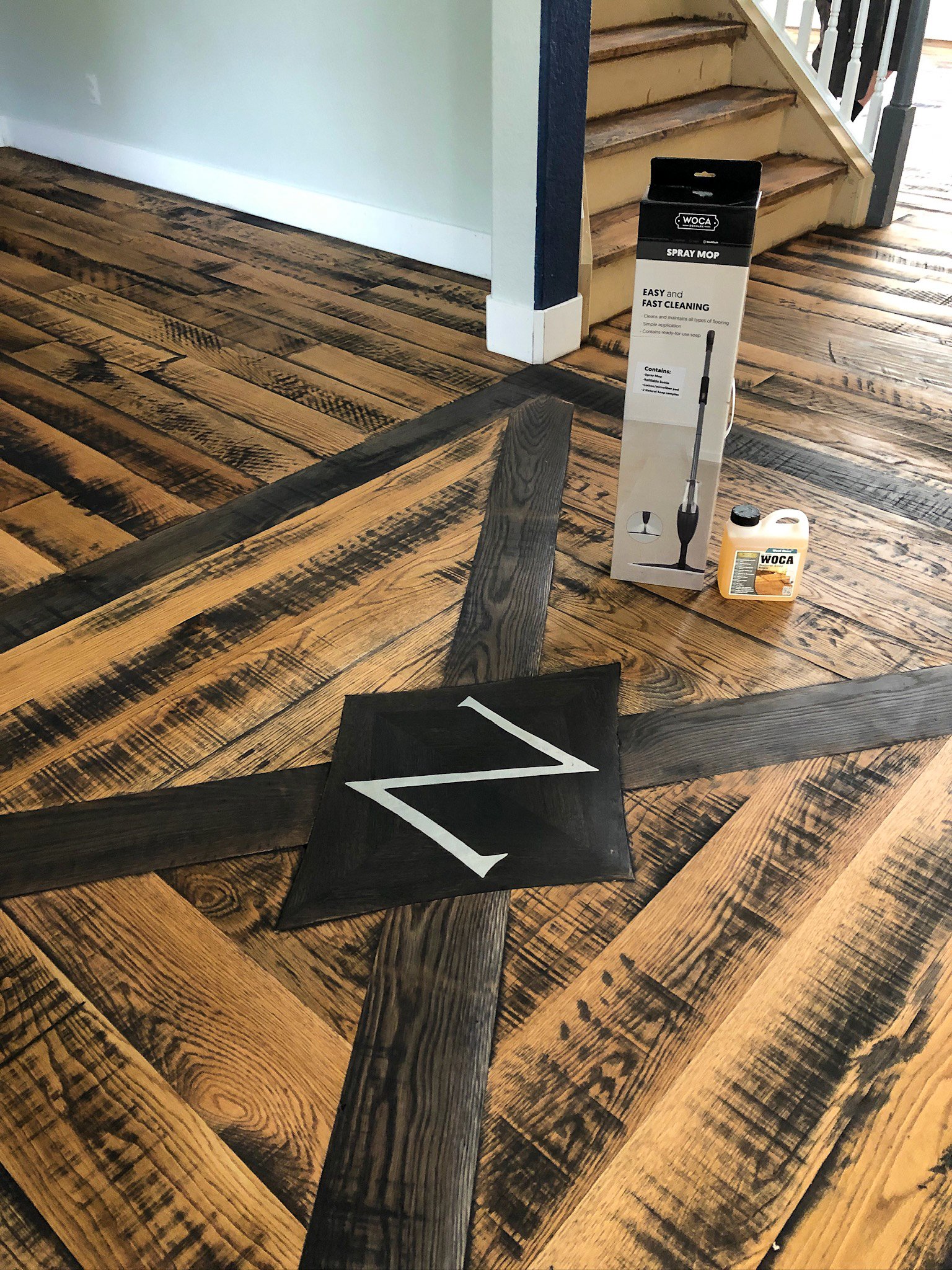
We use a Danish system called WOCA Master Oil quite a bit. It has been around for a long time, it is made for real wood buildings in real climates, and it gives beautiful, deep color without smothering the grain. Here is what homeowners usually like about it:
The floor still looks and feels like wood. Not plastic.
Colors are rich and natural, from light and airy to deep and bold.
Scratches and wear blend in better and are much easier to fix.
If a high-traffic spot starts to look dry, we can clean it, re-oil that area, and bring it back to life. No full-house sanding just because the kitchen got tired. In Colorado, penetrating oil makes even more sense. Our air is dry. Floors move. A finish that can move with the wood, instead of fighting it, will age better. Oil in the fibers flexes and shifts along with the boards. You do not have a thick plastic bridge over every tiny gap waiting to crack.
It still needs care. You clean it with the right soap, not whatever is on sale at the grocery store. Busy homes may want a light oil refresh in their main traffic lanes now and then. But you trade one big, expensive refinish for smaller, easier touch-ups over time. For a lot of families, that is a better deal.
Putting It All Together
If you strip it down, the three groups look like this:
Poly and conversion varnish are plastic armor. Tough at first, but more synthetic, more fumes, and harder to fix when they fail.
Water-based, wax, and hardwax oils soften that armor a bit. Less smell, sometimes a more natural look, but still some film on top.
True penetrating oils, like WOCA Master Oil from Denmark, live in the wood, not on top. They give great color, a natural feel, and easier long-term care—especially in a climate like Colorado.
There is no one finish that fits every house. A busy family with three big dogs might choose differently than a quiet home with no kids and a love for high gloss. Our job is to walk you through these options in plain language, show you real samples on real wood, and help you pick the system that fits your life.
If you want floors that still look honest and healthy ten years from now—not just shiny on day one—the finish matters. That is why we spend so much time talking about it.
Ready to Talk About Your Floors?
We'll help you choose the right finish for your home, your family, and Colorado's unique climate.
Get a Free Estimate